
Lagom in Practice, Not Just Theory
We've talked about lagom since section 1.1, and limits and
boundaries more specifically in section 2.5. Here, let's apply it
directly to the ten plants and berries you've just learned about.
 Passport
Applying just enough to the specific plants you've just learned.
We've talked about lagom since section 1.1, and limits and
boundaries more specifically in section 2.5. Here, let's apply it
directly to the ten plants and berries you've just learned about.
For nettle, chickweed, ground elder, plantain, and lambsquarters —
take a portion of leaves from across a patch rather than
stripping any single plant bare. These spread readily,
but a thoughtlessly stripped patch still takes time to recover
its fullness.
Fiddlehead fern shoots in particular deserve real restraint —
take no more than a few shoots from any one fern, leaving enough
for the plant to continue its growth that season. The same applies
to fireweed shoots. A fern stripped of all its shoots in one
visit can be seriously weakened.
When picking clover or dandelion flowers, leave a meaningful
portion for the bees and other pollinators who depend on them.
A patch with some flowers picked and many left is a healthy
balance; a patch picked completely bare disrupts more
than just your own harvest.
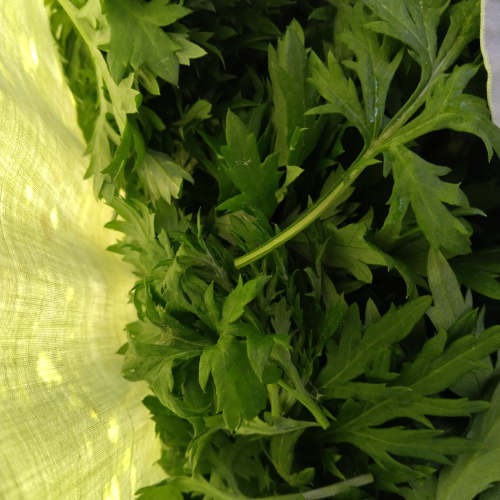
Mugwort's strong flavour means you rarely need much at all —
a small handful is usually plenty for most culinary or other uses.
This is one case where lagom and practical usefulness align
almost perfectly.
As mentioned in section 2.5, a general guide is to take no more
than a third of what you find in any patch. This matters especially
for slower-growing berries like cloudberry, and for shrubs visited
repeatedly across a season like bilberry and lingonberry.
For sea buckthorn and any other berries growing on woody plants,
remember the distinction from section 2.2 — pick the berry,
leave the branch undamaged. Sea buckthorn's thorns make this
especially important; resist the temptation to snap branches
for easier access.
Beyond any rule of thumb, the most reliable guide is attending
to the patch itself as you pick. A sense of "that's enough"
often arrives before any rule would tell you to stop.
Trust it.